
Plant sciences alumnus (’23) cultivates championship-level turf at Seminole Golf Club
Where are you from, and why did you choose to attend the Herbert College of Agriculture?
Born and raised in Franklin, Tennessee, just south of Nashville, I originally set out to pursue a career in the medical field. I enrolled in the University of Tennessee, Knoxville’s Kinesiology program, but by my fourth semester, my path had shifted. Like many turfgrass professionals, what started as a summer job quickly turned into a career — and ultimately led me to the Herbert College of Agriculture.
What led you to pursue a degree in plant sciences?
After my freshman year, and with the onset of COVID-19, the local public golf course needed extra hands. I was drawn in by free golf and the chance to earn some cash. My mom would tell you it was an escape for both of us. I started in the cart barn, but the monotony quickly wore on me. At the suggestion of the general manager, I called the superintendent. That first summer, I remember thinking, “I can’t imagine someone making this a career.” But the next summer, when I returned for the same reasons, everything changed. I was introduced to putting green construction, and I was hooked. That was the beginning of my journey with Herbert.
Can you tell us about your current job and what a typical day in your life looks like?
Today, I am fortunate to work at Seminole Golf Club in Juno Beach, Florida, where I’ve gained invaluable experience with bermudagrass management and personnel leadership at one of the game’s most respected venues. Located by the oceanside, Seminole challenges us daily with elements that demand firm, fast, and precise playing conditions. Our team embraces the pursuit of being better than the day before, and though our course isn’t seen on TV, our conditions rival those of championship stages.
What do you enjoy most about the work you do?
The most rewarding part of this career is seeing the immediate impact of our work. The results are on display each day for members to enjoy, and they remind us of the artistry and detail required in turf management. Mistakes happen, but they become lessons that shape us into better professionals.
Seminole is recognized as one of the best golf courses in the country. What is it like to be part of the team maintaining such a prestigious course?
Working alongside some of the industry’s best has accelerated my growth and given me a team whose dedication is unmatched. It’s rare to find a group so united in their joy of preparing a property that is admired within our gates and envied outside of them.
How would you describe your experience in the Herbert College of Agriculture?
Herbert was the hidden gem across the bridge from UT, Knoxville’s main campus. It’s a place filled with students and professors who prioritize passion. The friendships I built there remain some of my greatest resources — whether for advice, new ideas, or just a good laugh.
How did your plant sciences education at UT prepare you for your career in turfgrass management?
The Turfgrass Science and Management program fosters learning both inside and outside the classroom. Students are encouraged to take on internships or local positions, gaining real-world experiences that complement academic study. Through global internship opportunities, we were able to apply our learning at top golf courses and sports facilities, returning to Herbert with stories and skills that enriched classroom discussions.

Are there any faculty or staff at the Herbert College of Agriculture who made a difference in your educational experience?
I was fortunate to learn under mentors like Dr. John Sorochan, Dr. Brandon Horvath, and Dr. Jim Brosnan, who went beyond teaching. They took the time to know us personally — our goals, our stories, and our strengths — and guided us toward success. Their focus on learning over letter grades was invaluable, and even after graduation, they continue to be supportive allies.
Many people don’t realize the science and strategy behind maintaining a golf course. What’s one thing you wish more people understood about your work?
This profession may look like “just mowing grass” from the outside, but it’s much more. Golf course superintendents are electricians, plumbers, architects, chemists, meteorologists, and mechanics all in one. We adapt daily to the demands of plants, pests, weather, and machinery. Further, it is imperative to continuously research product chemistry, otherwise you will risk falling behind when battling ever changing pathogens. There is no constant in managing desirable plants and pests as they battle daily to outlast one another. It is a science — and an art — that requires respect for both the game and the environment.
What is your proudest professional accomplishment?
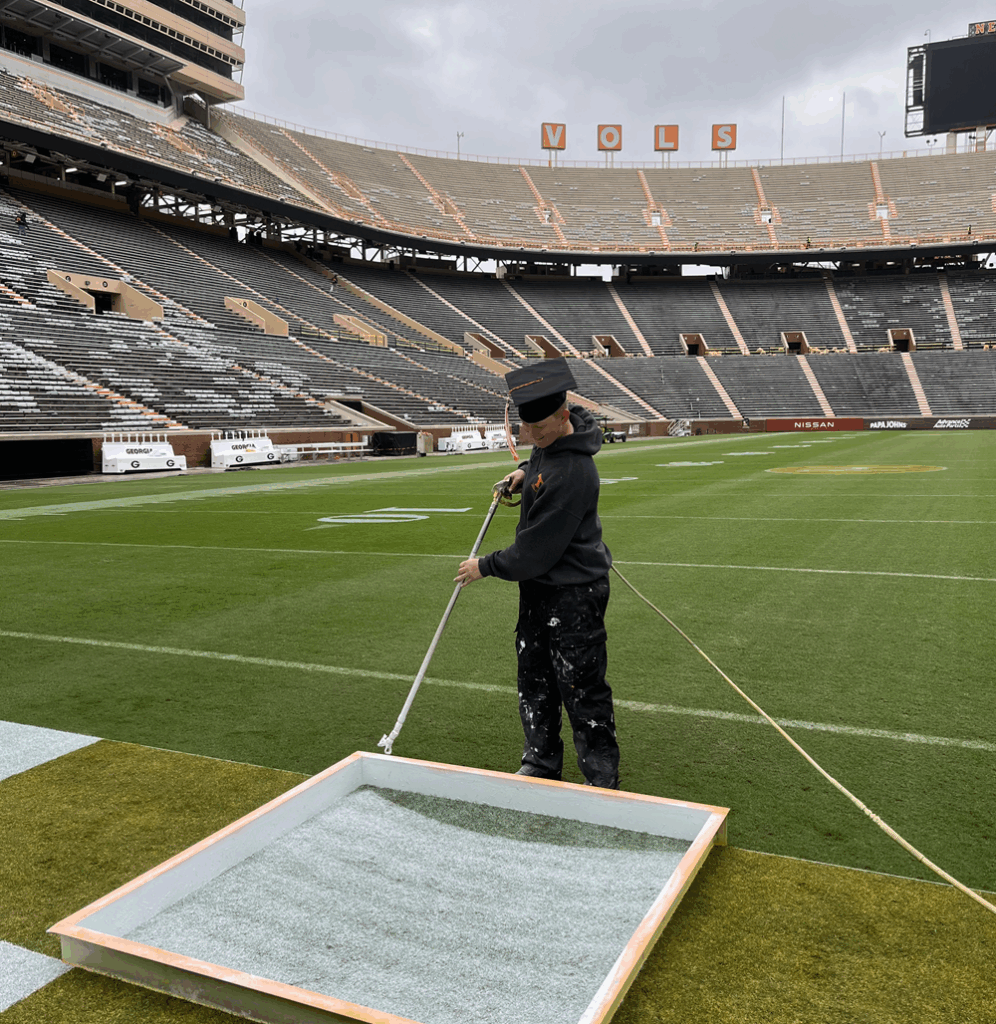
Alongside my golf course experience, I’m proud to have been part of projects like painting Neyland Stadium’s iconic checkerboard endzones and contributing to the Tomorrow Golf League, which is bringing innovation to competitive simulator golf. These opportunities reminded me that turfgrass knowledge applies far beyond fairways.
What do you like to do outside of work and/or what is a fun fact about yourself?
Outside of work, I enjoy playing golf and appreciating the work that goes into preparing the course. Also, I train for half and full marathons during different times of the year.