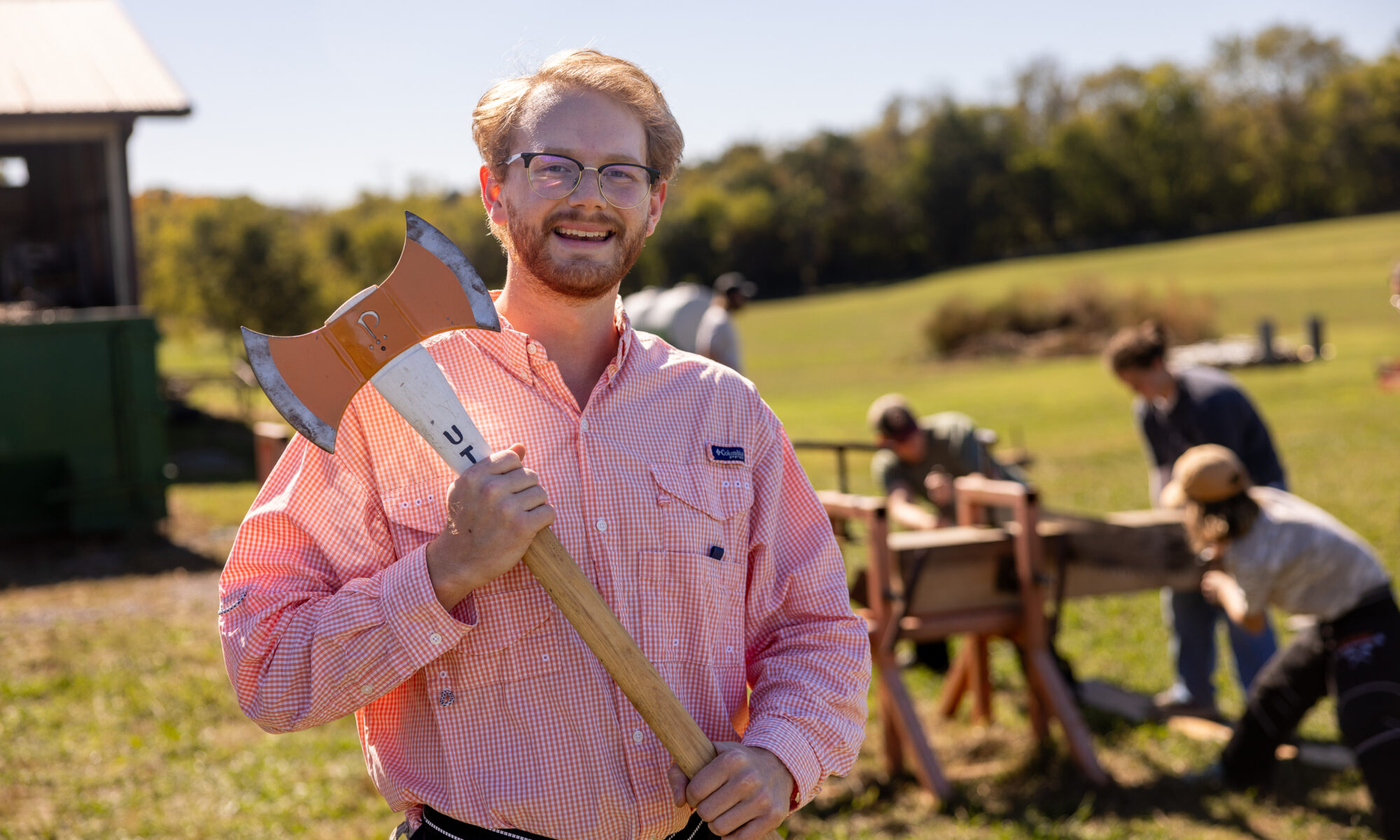
Forestry student turns lifelong passion for trees and nature into a future in research, education and conservation
Where are you from, and what led you to the Herbert College of Agriculture and the School of Natural Resources?
I am from Nashville, Tennessee, and I am a proud fourth-generation Volunteer. I have had many interests; however, trees have been my lifelong passion. I knew I wanted to do something involving natural resources. When I toured the Herbert College of Agriculture, I immediately knew it was where I wanted to be. When searching for colleges, I could not decide if I wanted the close-knit feel of a smaller school or the many opportunities offered at a large university. At Herbert, I found the best of both worlds.
What inspired you to study forestry, and what do you enjoy most about your major?
I started as an environmental science major in the Department of Biosystems Engineering and Soil Science but realized it was not the right fit for me. I then switched to natural resources and environmental economics, but that still wasn’t right. I entered the forestry program in the School of Natural Resources my sophomore year and never looked back. Forestry has allowed me to turn my lifelong passion – the study of trees, forests, and the ecosystems they support – into a career.
Have there been any specific classes, internship experiences, or professors at Herbert that have had a significant impact on your academic journey? Why?
Every class I have taken at Herbert has been formative in its own right; however, one class stands above the rest. Dr. Allan Houston’s Silviculture course at the Ames AgResearch and Education Center has been the most influential in my undergraduate career. From canoeing the Wolf River amongst the towering bald cypresses and beds of lily pads, to having fifteen hundred acres of pristine West Tennessee forest to explore, Dr. Houston provided us with the guided freedom necessary to become successful, knowledgeable foresters. He taught us not only how to be professionals, but also how to be dedicated, resilient, and confident.
Additionally, I would like to thank Dr. Donald Hodges for his influential impact on my education and professional development. From Forestry 100 to the school’s senior year Fall Camp, Dr. Hodges has continually encouraged me to reach my full potential. His door was always open, whether I wanted to discuss Timbersports competitions, Dr. Buckley’s passing, or my future research plans and graduate school.
What kind of extracurricular activities are you involved in, and how have they impacted your college experience?
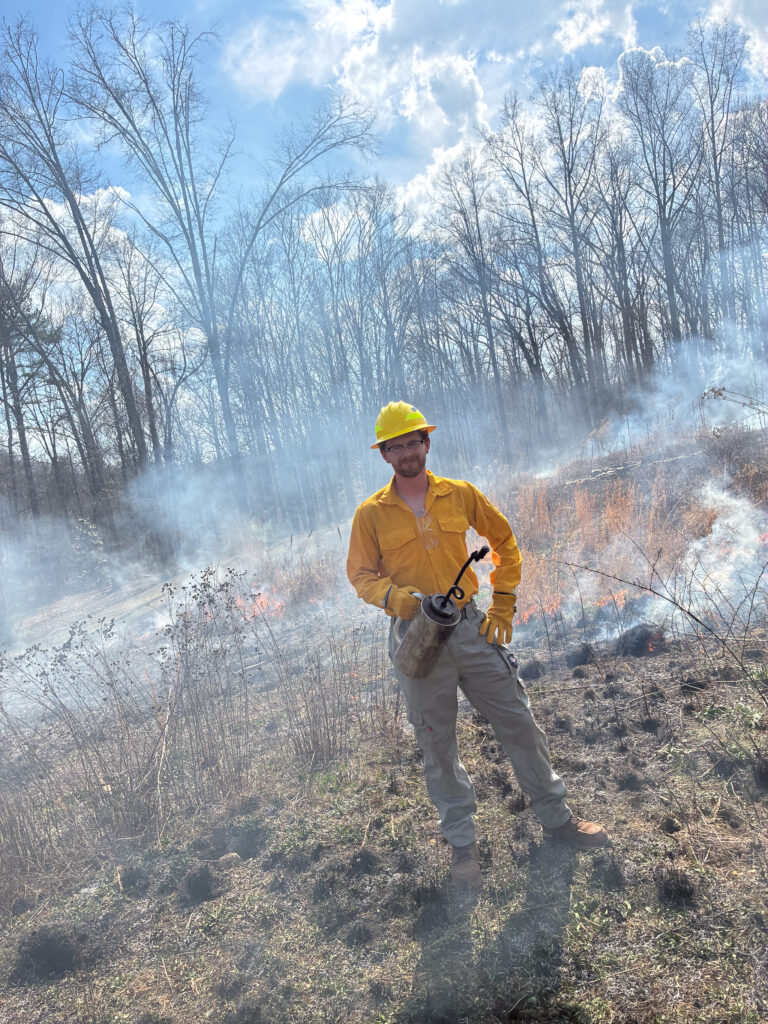
I have been involved in a variety of extracurricular activities throughout my college experience. As a freshman, I explored as many activities as possible. I sailed on East Tennessee lakes with the Sailing Club, worked alongside Tennessee Wildlife Resources Agency officers conducting bear checks with the Wildlife and Fisheries Society, and was active in the Caving Club.
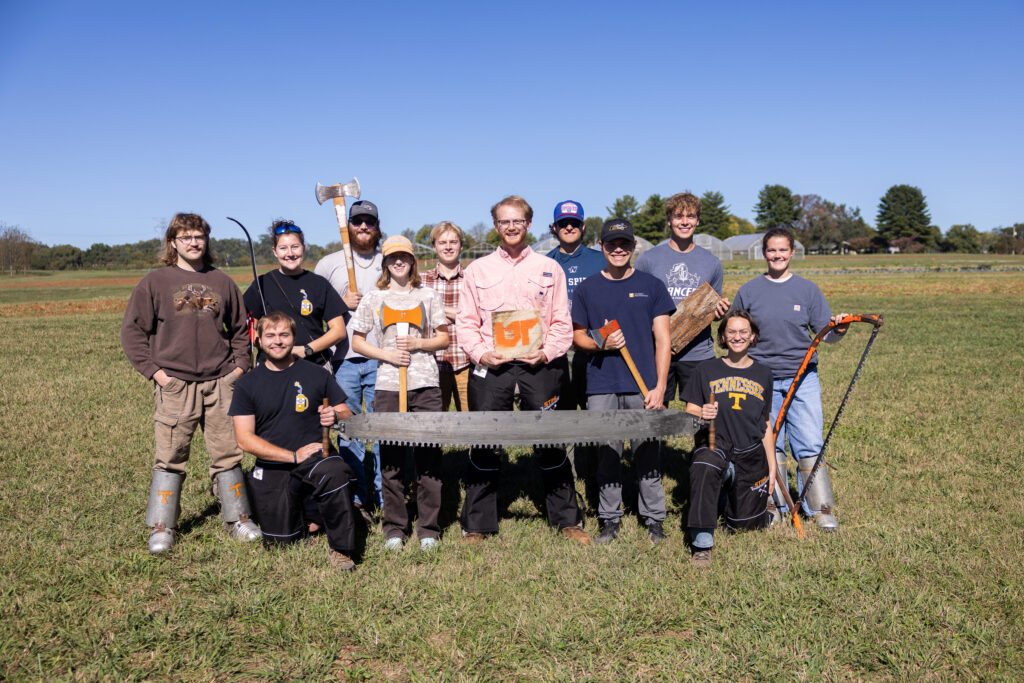
It was not until my junior year that I became heavily involved with the Forestry Club. The club’s mission is to provide students with as much exposure to the forestry industry as possible, while also fostering a supportive, engaging community. The club also sponsors a Timbersports team, a unique collegiate sports organization that hosts competitions around the world.
I currently serve as the Timbersports Captain, a role that involves coaching and leading the team while ensuring that practices and events are conducted safely.
Tell us more about the Forestry Club’s Timbersports team! What do you enjoy most about competing, and what have you learned through the experience?
Timbersports competitions include a wide variety of physical and technical events, ranging from axe throwing, pole climbing, and crosscut saw to dendrology, timber estimation, and wildlife identification. My primary event is dendrology, where competitors identify a diverse range of tree species. I also compete in some physical events, such as crosscut saw and bowsaw.
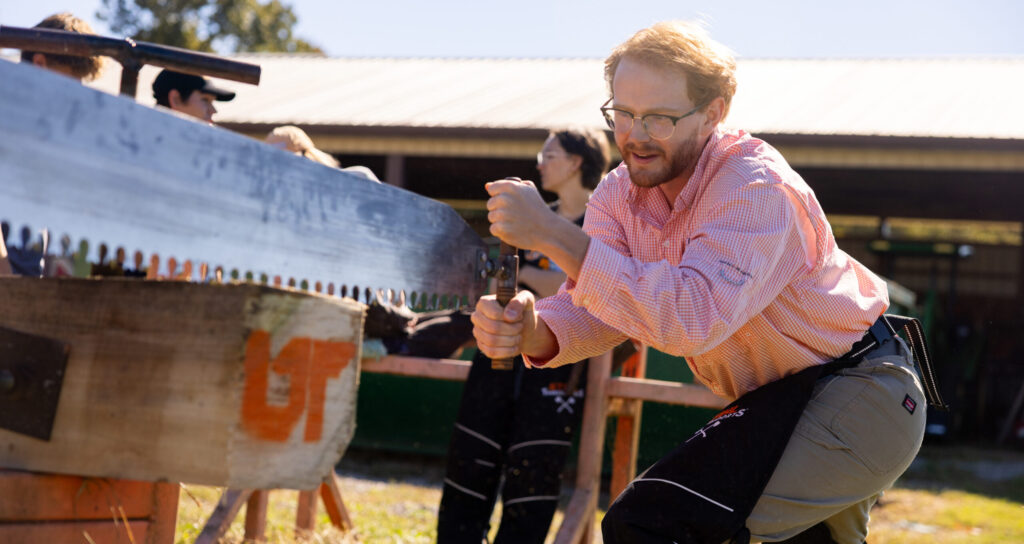
I enjoy the thrill of competition and application of forestry skills. There is nothing like the exhilaration of smoothly cutting through a block of wood as hundreds of people cheer you on. Through Timbersports, I have learned that no matter how much you think you know about a subject, there is always more to learn.
What learning experiences, either inside or outside the classroom, has been most beneficial for your education and future career?
Two of the most valuable learning experiences I have had have been interning for the UT Office of Sustainability and working as a teaching assistant for the School of Natural Resources’ dendrology course. As an intern for the Office of Sustainability, I worked on an effort to eliminate the use of plastic confetti on campus and replace it with a free, biodegradable alternative. Certain areas of campus, particularly around Ayres Hall and the University of Tennessee seal during graduation season, can become covered with plastic confetti. This plastic can damage our manicured landscape and eventually make its way into local waterways, including the Tennessee River. This experience taught me how to work within large institutions to create meaningful change, and that lasting change requires persistence.
The most impactful learning experience I have had at UT has been serving as a dendrology teaching assistant (TA). Professor David Buckley had been my mentor throughout my first two years in forestry, and he planned to hire me as a teaching and research assistant during my junior year. Although he passed away before the start of fall semester, I was still given the opportunity to serve as a TA for the dendrology course.
Working as a TA completely changed my career aspirations. Prior to that experience, I wanted to become a state forester. However, I discovered I felt a strong pull toward teaching, something that runs in my family. Serving as a TA was a formative experience. I learned how to navigate teaching people I was in other classes with and how to carry myself professionally. Above all, it helped me realize that my main goal in life is to share my love and knowledge of the natural world with others so they can pass that love on.
How has being part of the Herbert community impacted your personal and professional development?
The Herbert community has impacted me greatly, both personally and professionally. Herbert hosts a tight community of like-minded people who enjoy studying the environment and solutions to the issues it currently faces. I always feel at home when on the Ag Campus. One of Herbert’s greatest advantages is its small class size. Students can easily ask questions, get involved in undergraduate research, and have deeper, more thoughtful discussions and interactions with their peers. Furthermore, Herbert faculty are the best at UT. Each professor is extremely knowledgeable, friendly, and supportive of their students.
What has been the most rewarding or memorable part of your time at UT so far?
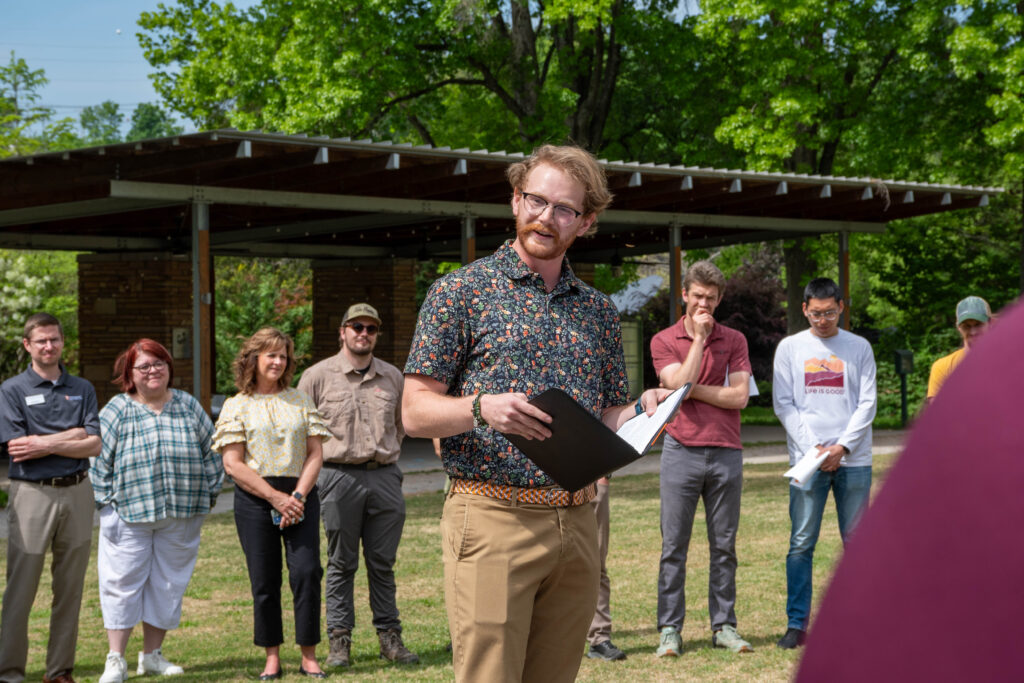
The most rewarding and memorable part of my time at UT was the honor of delivering Dr. Buckley’s eulogy at UT Gardens, Knoxville, this past spring. The Forestry Club worked with the School of Natural Resources to plant a white oak, his favorite tree, in the UT Gardens along with a plaque to honor his legacy.
Dr. Buckley was the first professor I met who loved the forest as much as I did, not for the value of timber, but for its intrinsic beauty and importance. He introduced me to forestry and showed me that I could build a career around studying my greatest passion.
Giving his eulogy was one of the most difficult things I have ever done; Dr. Buckley was not only a mentor, but a friend. I was incredibly nervous while preparing my remarks, but as I stood in front of fellow students, staff, and faculty, a calm wave washed over me. I knew that this was my opportunity to honor a man who profoundly shaped my life and share the impact he had on the School of Natural Resources. This experience taught me about courage, resilience, and staying calm under immense pressure.
What are your goals for the future, and how has your time at UT helped prepare you for what’s next?
My goal is to earn a PhD in Ecology and Evolutionary Biology with a focus on the mycorrhizal network and the relationship between plants, fungi, and the ecosystem. I am fascinated by how most plant life is supported by symbiotic relationships formed with fungi, how these interactions are affected by climate change, and how they impact ecosystems around the globe.
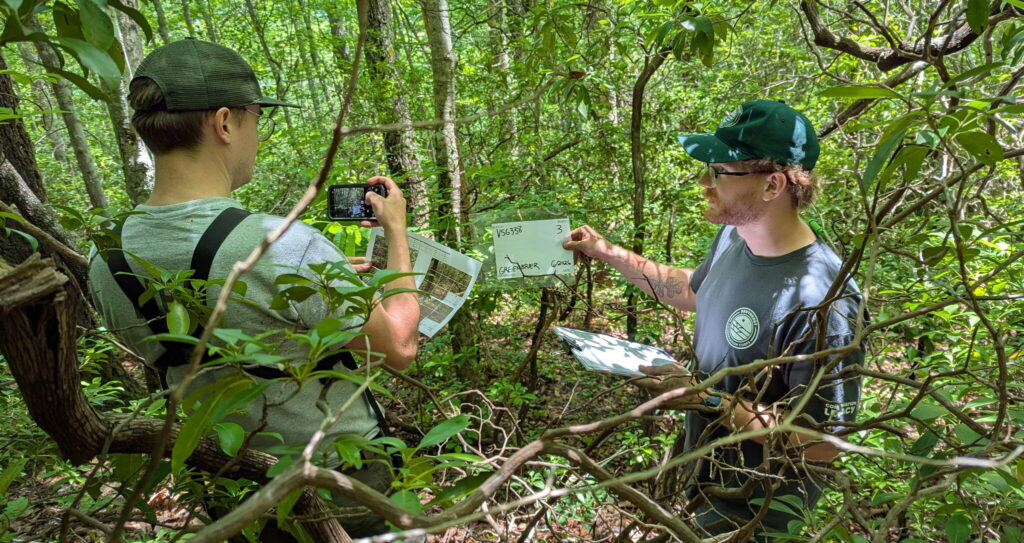
Eventually, I hope to spend time working as a scientist park ranger in the Inventory and Monitoring Division of the National Park Service before pursuing a career as a professor. I have wanted to be a park ranger since middle school, and last summer I served with the Southeast Conservation Corps in the Great Smoky Mountains National Park. The knowledge and experience I gained through my academic coursework at UT prepared me to work alongside ecologists in the Inventory and Monitoring Division, where I helped survey backcountry plots in the park for the service-wide Vital Signs Monitoring Initiative. My time in the Smokies was not only the most enjoyable summer of my life, but also the most impactful internship experience I have had.
Working for the park service fulfilled my dream by allowing me to conduct research outdoors in a majestic, breathtaking landscape. At the same time, Dr. Buckley, my family, and my time as a TA have inspired me to consider a career in higher education. Ultimately, I hope to build a career that combines field research, education, and conservation.
What are some of your hobbies or a fun fact about you that people might be surprised to learn?
My favorite hobby is backpacking in our nation’s public lands. If I could, I would always be on a mountain trail, hiking to the next campsite with good company. Two of my personal goals in life are visiting every national park and every U.S. state. I am currently at 36 states and 17 national parks, so I have more work to do!