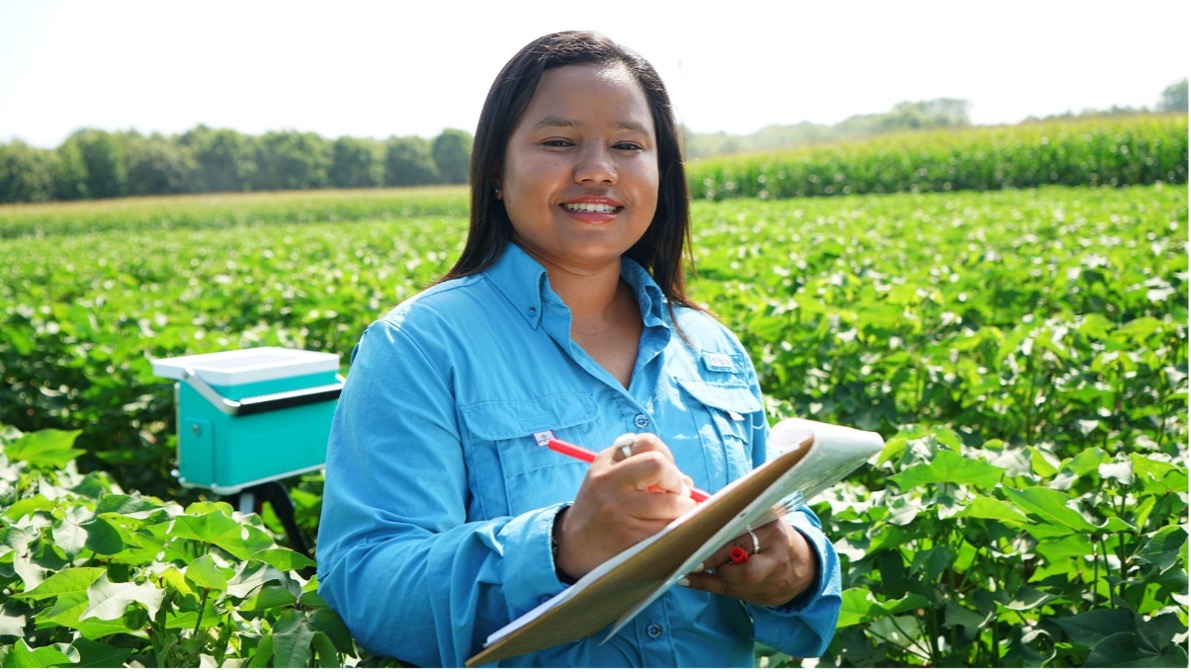
Plant sciences PhD candidate uses precision agriculture to advance sustainable cotton production at the West Tennessee AgResearch and Education Center
Where are you from, and what led you to the Herbert College of Agriculture at the University of Tennessee?
I am from Nepal. My journey in agriculture started when I began as an undergraduate at Sher-e-Bangla Agricultural University in Dhaka, Bangladesh. There, I gained not only a strong foundation of plant biology, but also the huge scope of agriculture. During this time, I interned with the plant botany team at the Nepal Agricultural Research Council where I was involved in a maize and wheat breeding project. It was here I found a deeper purpose to contribute, even in a small way, towards ensuring global food and fiber security.
After graduating during the COVID-19 pandemic and witnessing the vulnerabilities in global agribusiness economics systems, I realized the critical importance of sustainable food chains. This experience inspired me to pursue my master’s degree in agribusiness economics. However, as I delved deeper into the field, I came to understand that climate change poses a significant, overarching threat to the global agricultural industry. This realization brought me to the conclusion that precision agriculture is not just a modern convenience, it’s a necessity.
I was particularly drawn to Dr. Avat Shekoofa’s lab in the UT Department of Plant Sciences, which focuses on water and stress management in crops. Her work on identifying drought-tolerant genetic traits in soybeans, corn, and cotton as well as utilizing advanced technologies like sensor-based irrigation, drone modelling tools, environmental monitoring equipment, and more greatly inspired me.
Why did you choose plant physiology?
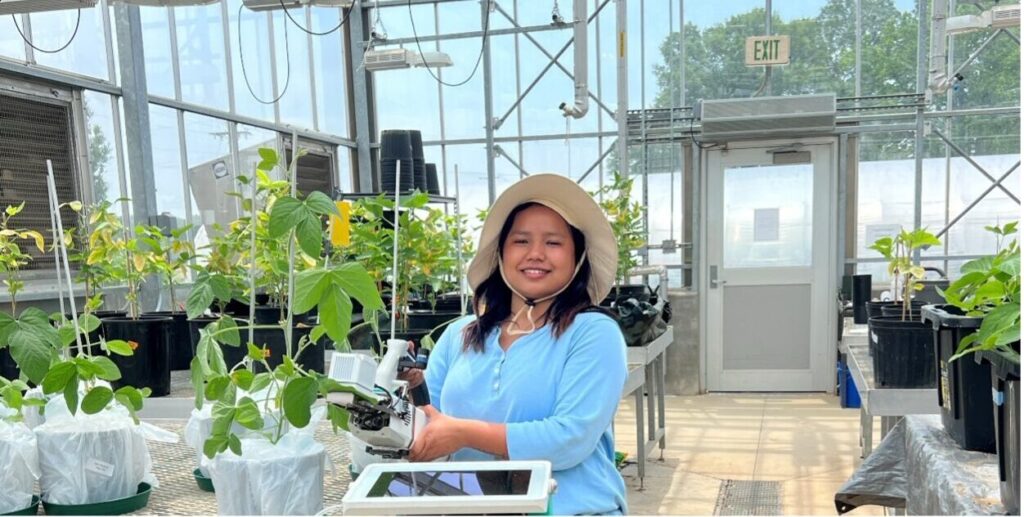
I have always been fascinated by the fundamentals of plant physiology, as it serves as a bridge between plant biology and practical agriculture. This field provides essential insights and strategies to enhance crop productivity and sustainability, especially in our rapidly changing world. Understanding how plants grow, develop, adapt, and respond to the environment has always captured my interest.
Global climate change and growing populations have led to significant reductions in arable land and available natural resources. Among the most major challenges in agriculture are heat and water stress, which directly threatens global food and fiber security. To address these problems and ensure sustainable agricultural production, a strong understanding of plant physiology is important. Identifying genotypes that are tolerant to heat and water stress can play an essential role in achieving long-term sustainability in agriculture.
Tell us about your research.
My research is on the study of cotton physiology using smart irrigation and crop simulation models.
Since the majority of Tennessee cotton is produced under rainfed condition, unpredictable weather like extreme heat, humidity, and unstable rainfall patterns create challenging scenarios for maintaining cotton growth and productivity for non-irrigated farms. Cultivar selection, agronomic practices, physiological screening, and smart irrigation using soil moisture sensors and crop simulation models can address these abiotic stress-related problems and provide irrigation recommendations to producers.
In addition, my research will compare the costs and potential benefits of different irrigation systems and methods. This will help identify irrigation strategies that can increase profitability while reducing financial risks.
What do you hope is the long-term impact of your findings?
I hope that my research will assist cotton producers in identifying drought-tolerant cultivars and provide improved irrigation management strategies under diverse climatic conditions. My findings will also enhance the effective implementation of precision agriculture technologies, such as sensor-based irrigation systems. Ultimately, my research aims to drive a transformation in cotton production from reactive to predictive approaches, from high water use to water-efficient practices, and overall improve cultivar-specific water management.
This shift will allow regions like West Tennessee and those with similar climatic conditions to produce high-quality, profitable cotton more sustainably, even amidst changing weather conditions.
How has being located at the West Tennessee Ag Research and Education Center contributed to your accomplishments?
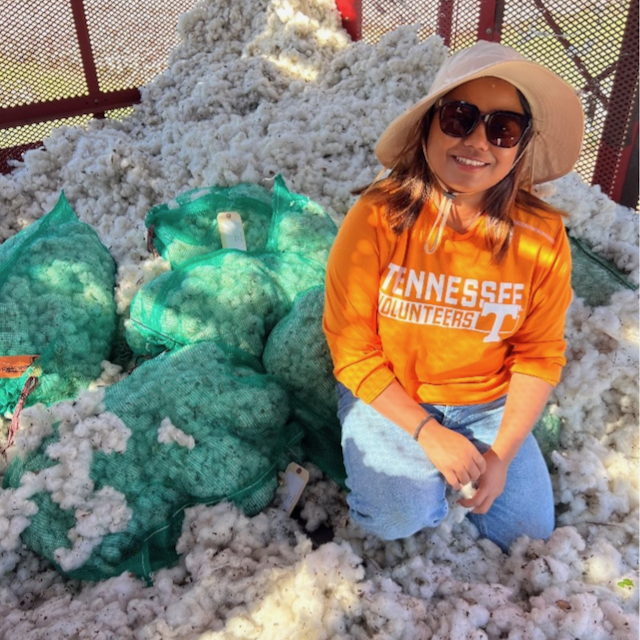
Being located at the West Tennessee AgResearch and Education Center strengthened my research experience and increased my confidence. Engaging in numerous talks, seminars, field work, presentations, and more while also interacting with Extension specialists, researchers, producers, and others has prepared me for collaborative work and future opportunities.
What faculty members or experiences have been especially meaningful during your time in the Herbert College of Agriculture?
My experience so far at the Herbert College of Agriculture has been incredibly rewarding. Every faculty member I have interacted with has had a meaningful impact on my academic journey. In particular, the support from my primary advisor, Dr. Avat Shekoofa, has been especially significant. She gave me the opportunity to pursue a PhD in crop physiology, for which I am forever grateful.
Through Dr. Shekoofa, I had the great opportunity to connect with statewide and national experts such as UTIA cotton specialist Dr. Tyson Raper, UTIA economist Dr. Le Chen, and Texas A&M agricultural engineer Dr. Srinivasulu Ale. I am grateful to have them in my committee, and I truly appreciate their dedication and support towards my research and professional development. The guidance and mentorship I receive from them will play a vital role in shaping my future career path.
What advice would you give to future Herbert students?
My advice to future Herbert students is to stay focused, set clear goals, and be determined about what you truly want to achieve in life. It’s essential to be passionate and enthusiastic about your chosen field, and without that drive, it’s easy to lose track. Self-discipline and time management is crucial in graduate school; always stay flexible, stay consistent, and seek opportunities for learning and personal growth.
Upon the completion of your doctoral degree, what’s next for you? Do you have any specific career or educational goals that your time at Herbert has helped prepare you for?
I truly enjoy sharing knowledge and spreading positivity. To me, a teacher holds the highest respect in society, as they play a vital role in shaping future generations. In Nepal, we refer to teachers as “gurus,” figures who not only impart knowledge, but also offer guidance and discipline. In return, they are honored with deep respect and gratitude.
I am sincerely thankful for every teacher I have had, from my early school days to the present, as each one has taught me something valuable. After completing my doctoral degree, I plan to apply for a position as an assistant professor or post-doctoral researcher. To become a professor who actively contributes to research for sustainable agriculture is my dream career.
What do you like to do outside of school and/or what is a fun fact about yourself that your fellow students and professors may not know?
A fun fact about me is that I love the arts. Whether it’s dancing, music, singing, poetry, crafting, knitting, drawing, designing, or cooking, I enjoy all forms of creative expression. Although I don’t always find time to explore all of these hobbies, I especially enjoy designing bridal dresses and creating mandala art whenever I have free time. Outside of academics, I love traveling, hiking, and camping in the woods. Spending time in nature is something I always cherish.