Associate professor of veterinary epidemiology advances One Health through research in disease surveillance, food safety, and public health
Where are you from and how did your education and career lead you to the University of Tennessee College of Veterinary Medicine?
I am originally from Nigeria, and my journey to the University of Tennessee has taken me across two continents and three countries. I earned my Doctor of Veterinary Medicine degree from the University of Nigeria, Nsukka. I began my professional career in February 2004 as a public health veterinarian with the Delta State Ministry of Agriculture in Warri, Nigeria. My responsibilities included meat inspection at slaughterhouses and some clinical veterinary practice. Within my first year, I encountered significant food safety challenges that made me realize I could make a greater impact on public health through advanced training in food safety and epidemiology. That experience became a turning point in my career.
In 2006, I moved to the United States to pursue graduate studies at Michigan State University, where I earned a master’s degree in Food Safety in 2008 and a PhD in Epidemiology in 2011. I subsequently completed postdoctoral training in Nutritional Epidemiology at the Ontario Veterinary College, University of Guelph, Canada, from 2011 to 2014, before joining the University of Tennessee College of Veterinary Medicine in 2015.
Looking back, what began as a desire to address food safety challenges in Nigerian slaughterhouses evolved into a career dedicated to understanding and preventing diseases at the population level. That experience continues to shape my research, teaching, and commitment to veterinary public health today.
What is your role, and can you describe what you do on a typical day?
I am an Associate Professor of Veterinary Epidemiology and Director of the Veterinary Public Health concentration in the Master of Public Health (MPH) program at the University of Tennessee. My responsibilities span teaching, research, student mentorship, academic administration, and professional service.
There isn’t really a typical day, and I enjoy that about my job! On any given day, I might teach epidemiology to veterinary or public health students, meet with graduate students about their research, analyze data, work on manuscripts or grant proposals, or advise students pursuing the dual DVM-MPH degree.
I also collaborate with colleagues on research projects, mentor graduate students, and help guide the continued development of our Veterinary Public Health program. Beyond the university, I contribute to professional organizations and initiatives that advance veterinary preventive medicine and epidemiology.
Balancing these responsibilities can be challenging, but I enjoy the variety and the opportunity to contribute to the profession in different ways. No two days are quite the same, which keeps things interesting!
What drew you to epidemiology, and what do you find most interesting about this field?
My interest in epidemiology grew from my early experiences as a public health veterinarian in Nigeria. Working in slaughterhouses exposed me to food safety challenges and raised questions that went beyond individual animal health. I wanted to understand why certain health problems occurred, what factors contributed to them, and how they could be prevented at the population level.
What fascinates me most about epidemiology is how it brings together mathematics, science, and real-world problem-solving to improve health outcomes. During a lecture I delivered at Central Luzon State University in the Philippines in October 2025, titled “Epidemiology: Where Mathematics Shapes Public Health,” I emphasized how mathematical and statistical approaches help us uncover disease patterns, identify risk factors, and transform data into meaningful evidence that informs public health decisions.
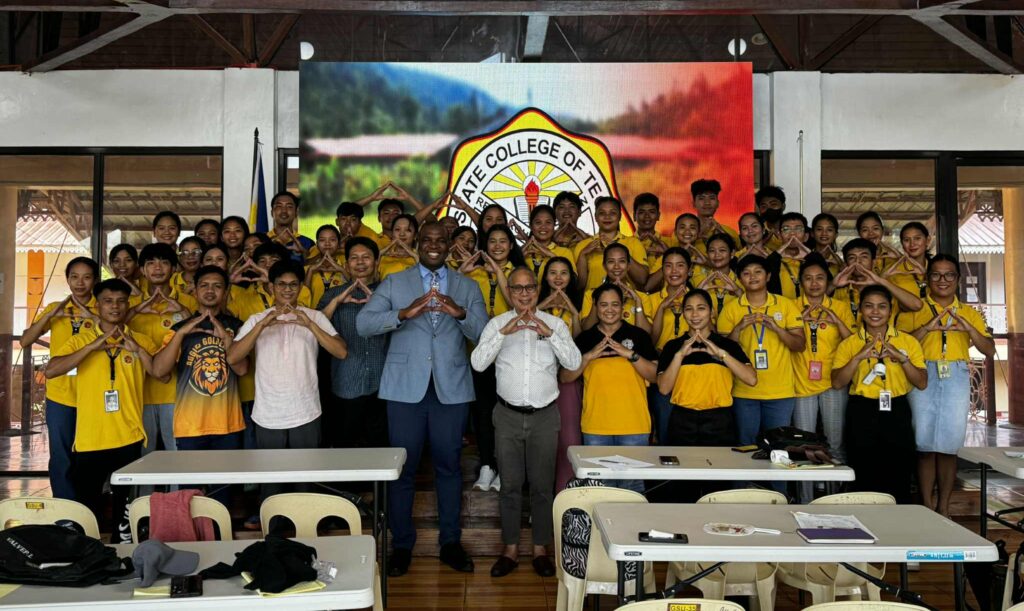
I also appreciate the field’s versatility. The same epidemiological principles can be applied to infectious diseases in livestock, antimicrobial resistance, food safety, and emerging public health threats. To me, epidemiology is essentially investigative science, combining curiosity, analytical thinking, and evidence to answer important questions and develop effective prevention and control strategies. It is this ability to connect numbers to real-world health challenges and translate scientific findings into meaningful action that continues to inspire me.
What is your research focus, and why is it important?
My research focuses on veterinary epidemiology, pre-harvest food safety, infectious disease surveillance, and antimicrobial resistance, particularly in food-producing animals. Broadly, I am interested in understanding the factors that influence animal health and identifying evidence-based strategies to prevent and control diseases.
Some of my research examines tick-borne diseases in cattle, including bovine anaplasmosis and theileriosis. Other projects focus on milk quality, udder health in dairy herds, and patterns of antimicrobial use and resistance. I am also exploring how emerging technologies, including artificial intelligence and predictive analytics, can improve disease surveillance and support earlier interventions.
This work matters because its impact extends beyond animal health. Healthy animals support a safe, sustainable food supply, and farm-level disease prevention can have important implications for food safety, antimicrobial resistance, and human health. Ultimately, my goal is to generate practical evidence that veterinarians, livestock producers, and public health professionals can use to make informed decisions, improve animal health, and protect public health.
Your work brings together veterinary medicine, public health, and food safety. Can you explain how these areas intersect?
These areas are closely connected, and that connection is at the heart of the One Health approach, which recognizes that animal, human, and environmental health are interconnected. Veterinary medicine plays a critical role in maintaining the health of food-producing animals, but what happens on the farm can have implications far beyond the farm itself. For example, infectious diseases, antimicrobial use, and animal management practices can influence food safety, antimicrobial resistance, and ultimately human health.
My research focuses on the pre-harvest stage of food production, where we can identify health risks and implement preventive measures before food products enter the supply chain. By addressing potential problems early, we can improve animal welfare and productivity while reducing risks to consumers and communities. I often remind my students that veterinarians do much more than care for individual animals. We also play an essential role in protecting the food supply, preventing disease, and addressing complex health challenges that cross the boundaries between animals, people, and the environment.
What is the most fulfilling part of your work, and why?
Without question, one of the most fulfilling aspects of my work is mentoring students and watching them grow personally and professionally. It’s incredibly rewarding to see a student who initially finds epidemiology intimidating begin to understand its relevance and build confidence in applying epidemiological principles. I particularly enjoy helping students discover career opportunities they may not have considered, whether in clinical practice, public health, research, government, or industry.
I have also had the privilege of mentoring students at different stages of their academic and professional journeys, from veterinary and MPH students to doctoral trainees and veterinarians pursuing specialty board certification. Seeing former students and mentees reach important career milestones is especially gratifying.
Research discoveries and professional accomplishments are rewarding, but the chance to positively influence the next generation of veterinarians and public health professionals gives my work lasting meaning. Knowing that the knowledge and skills we share with students will continue to benefit others long after they leave our classrooms is a powerful motivation.
You were recently named president-elect of the Epidemiology Specialty of the American College of Veterinary Preventive Medicine. What does this opportunity mean to you, and what do you hope to contribute in this role?
It is a tremendous honor and a meaningful milestone in my professional journey. The American College of Veterinary Preventive Medicine (ACVPM) has played an important role in my professional development since I became board-certified in Veterinary Preventive Medicine in 2014 and subsequently in Veterinary Epidemiology in 2015. Over the years, I have had the privilege of serving the college in various capacities, including on the Epidemiology Specialty and General Preventive Medicine examination committees, and most recently as chair of the Examination Committee. These experiences have strengthened my appreciation for the importance of maintaining high professional standards, supporting future diplomates, and advancing our specialty.
As president-elect, I look forward to building on the work of those who came before me, strengthening mentorship and professional development opportunities, and increasing the visibility and impact of veterinary epidemiology. I am particularly passionate about encouraging more veterinarians to explore the specialty and ensuring we continue to prepare professionals to address emerging animal and public health challenges. I also hope to foster greater collaboration and engagement among diplomates, recognizing that our specialty’s strength lies in the diverse expertise and experiences of its members. For me, this opportunity is both an honor and a responsibility to give back to a profession and specialty that have contributed so much to my career.
Looking at your career as a whole, what experiences have shaped you the most as a veterinarian and educator?
Experiences across different countries, institutions, and disciplines have shaped my professional journey. My veterinary education at the University of Nigeria, Nsukka, laid the foundation for my career. At the same time, my early work in public health and meat inspection helped me appreciate the critical connections between animal health, food safety, and human health. My graduate training at Michigan State University and postdoctoral experience at the University of Guelph broadened my scientific perspective and reinforced the importance of curiosity, collaboration, adaptability, and lifelong learning. Working in different academic and professional environments also taught me to appreciate diverse perspectives and approaches to solving problems.
Leadership and service have also been important parts of my journey, beginning long before my academic career. In high school, I served as Library Prefect at Government College Umuahia. During my veterinary education at the University of Nigeria, Nsukka, I held two distinct leadership positions: Governor of the Ancient Hellenic Order of the Beta Sigma Fraternity, a service-oriented organization dedicated to excellence, philanthropy, and community engagement, and President of the Association of Veterinary Medical Students. These early experiences helped shape my understanding of responsibility, teamwork, service, and the importance of building meaningful relationships.
Perhaps the most important lesson I’ve learned is that professional success is not simply about personal accomplishments but also about the opportunities we create for others. That philosophy continues to guide my approach to teaching, mentorship, research, and leadership.
What advice would you give to students interested in pursuing a career in veterinary medicine?
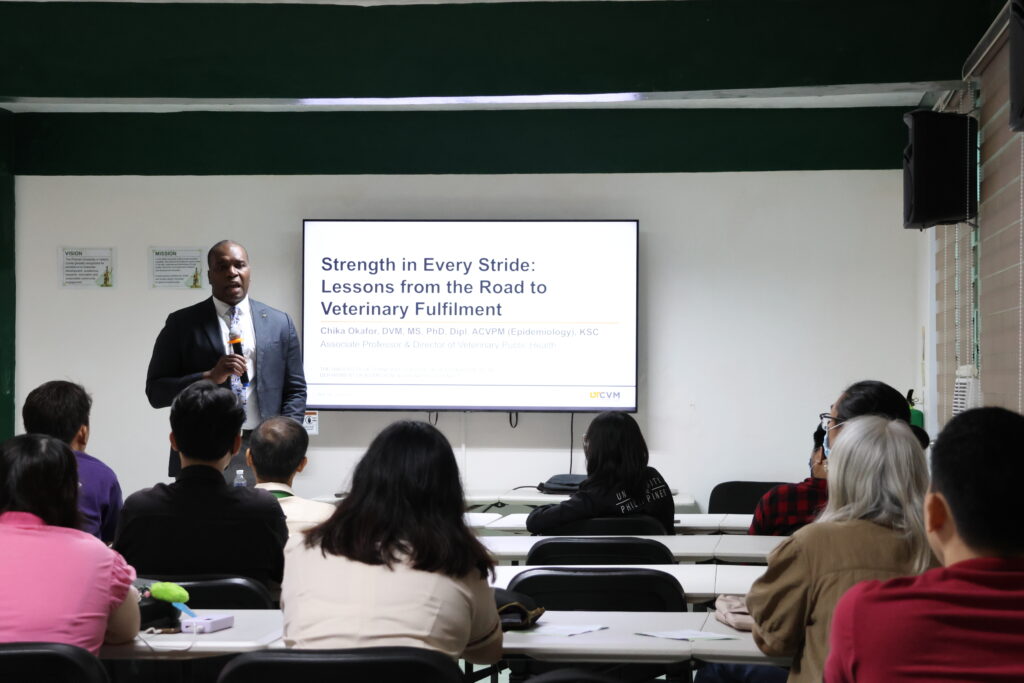
In October 2025, I had the opportunity to speak with veterinary students at five universities across the Philippines. My presentation, titled “Strength in Every Stride: Lessons from the Road to Veterinary Fulfillment,” drew inspiration from my experience of completing a marathon while carrying a weighted backpack in April 2025. I used the parallel between that physical challenge and navigating a professional career to share an important message: A fulfilling career in veterinary medicine is not a sprint; it is a marathon.
Like a marathon, a career in veterinary medicine requires commitment, preparation, resilience, and the wisdom to pace yourself. There will be moments of excitement and accomplishment, but also setbacks, disappointments, and unexpected turns. What matters most is not how quickly you reach your destination, but how you navigate the journey, learn from your experiences, and continue moving forward.
I encourage students to remain curious, embrace opportunities beyond their comfort zones, and recognize that their career paths may evolve in ways they never anticipated. My own professional journey, from veterinary training in Nigeria to public health practice, epidemiology, research, and academia across different countries, is a testament to the value of remaining open to new possibilities.
Equally important is recognizing that no one completes a marathon alone. Seek mentors, build meaningful professional relationships, surround yourself with people who challenge and support you, and be willing to extend that same support to others.
Finally, remember to enjoy the journey. Celebrate the small victories, learn from setbacks, and never lose sight of why you chose this profession. Veterinary medicine offers countless opportunities to make a difference, whether through clinical practice, public health, research, food safety, or service to communities.
Success is not simply about reaching the finish line. It is about the lives you touch, the difference you make, and the fulfillment you find along the way.
What do you like to do outside of work and/or what is a fun fact about yourself that your colleagues and students wouldn’t know?
Outside of work, I enjoy spending quality time with my family, traveling, and firing up the smoker for some good barbecue. Smoking meat has become one of my favorite ways to unwind, experiment with different flavors and recipes, and bring family and friends together. There’s something especially satisfying about sharing a delicious barbecue meal with the people you care about.
I also enjoy what I jokingly call my “crazy outdoor workouts” with the men of F3, a fitness, fellowship, and faith group. Our workouts are held outdoors throughout the year, regardless of the weather, whether it’s rain, snow, or sunshine, and some of them can be intense! Beyond the physical challenges, what I value most is the camaraderie, accountability, and genuine friendships that come with being part of the group.
Between family time, barbecue, travel, and those early morning outdoor workouts, I’ve found some great ways to recharge, stay active, and maintain a healthy balance outside academia.