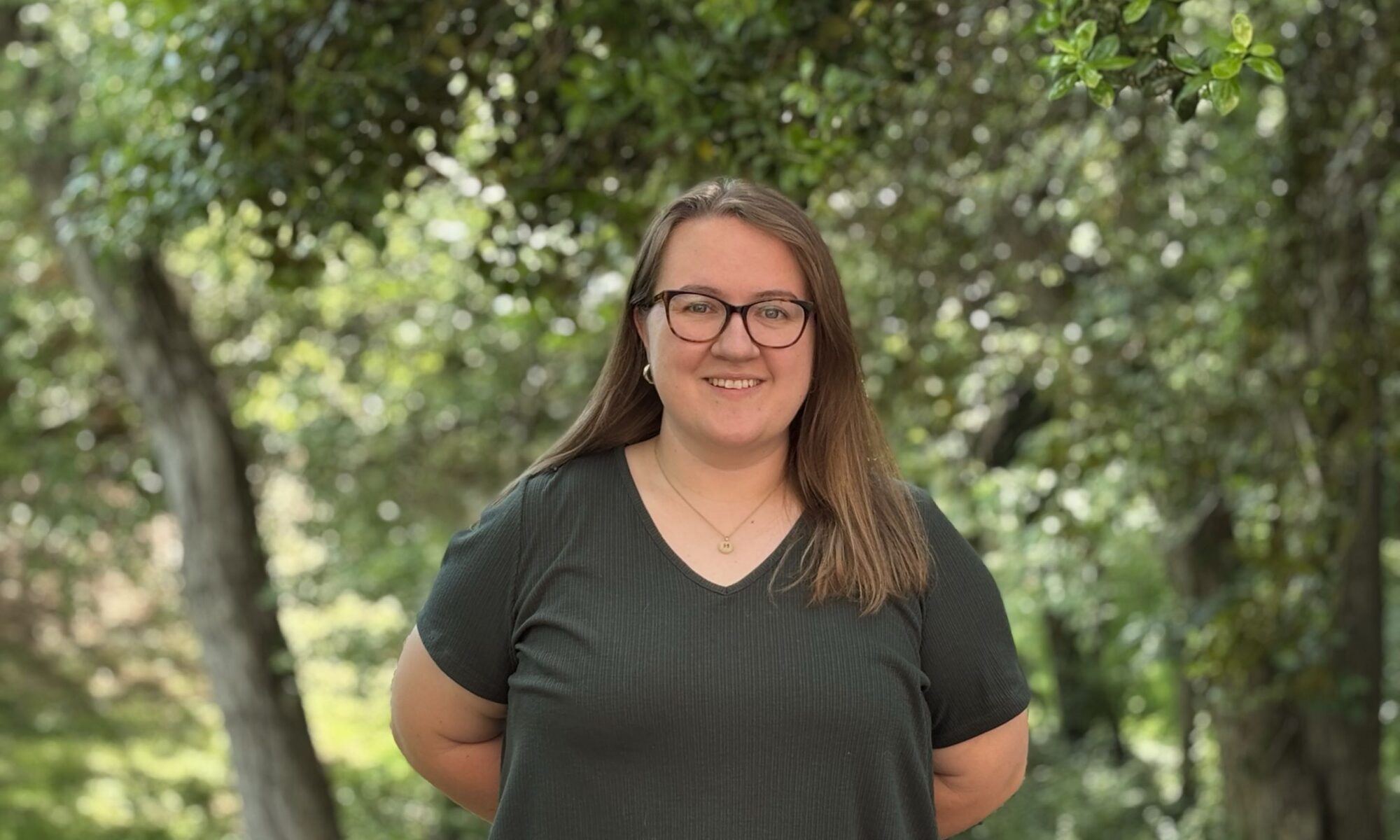
Animal science alumna (’20) champions species conservation through wildlife education and outreach
Where are you from, and what inspired you to study animal science in the Herbert College of Agriculture at the University of Tennessee?
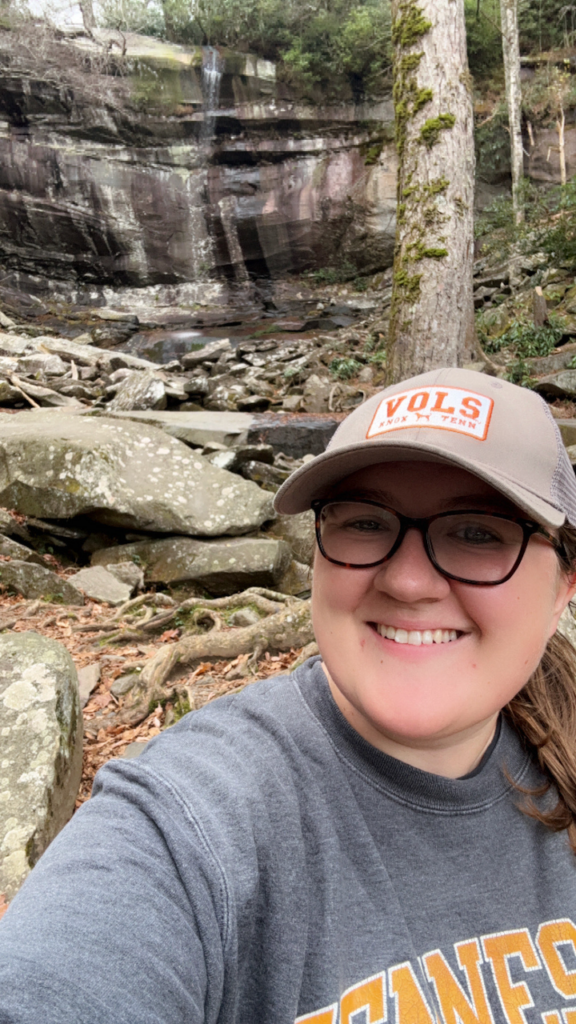
I am from Charlottesville, Virginia. I have family members who are big Vols fans, so that is how I was first introduced to the University of Tennessee. My goal was always to work with animals, and once I learned about UT’s excellent Animal Science program in the Herbert College of Agriculture, I knew it would be the right fit for me.
What is your current role, and can you describe how your career path has led you to where you are today?
I am currently the Ambassador Program Manager at the Wildlife Center of Virginia. During my time at University of Tennessee, I interned with a local bird of prey sanctuary that I discovered through university connections, and that experience is where I fell in love with working with animal ambassadors. After graduating, I accepted a full-time position there and stayed for three years. Eventually, I felt ready to move into a management role and work with a more diverse range of species, which ultimately led me to my current position.
What sparked your interest in working with animals in a hands-on educational setting?
I discovered early in my career that when educating the public about wildlife through ambassador animals, you are not just sharing general species facts, you are sharing each animal’s individual story. For one reason or another, the animals I have worked with have been deemed non-releasable, and becoming ambassadors gives them a second chance to make an impact.
When we take these animals out for programs, we can share species facts all day, but what truly connects people to wildlife is hearing each animal’s unique story. That personal connection is what leaves a lasting impact on how people view wildlife conservation. Seeing that spark in people is what ultimately drove me into this career and continues to inspire me every day.
What are your day-to-day responsibilities in your current position?
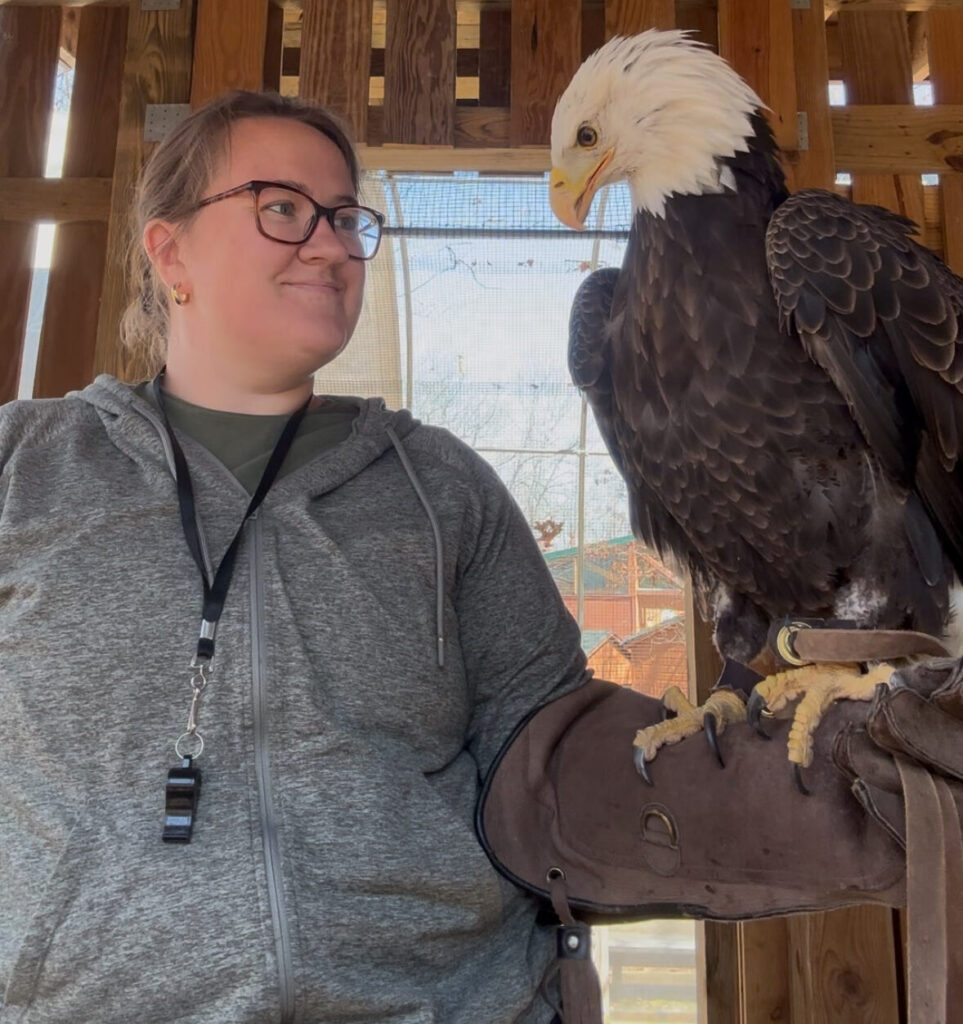
One of the things I love most about my job is that no two days are ever the same! I currently co-manage a collection of 16 non-releasable animal ambassadors at the Wildlife Center of Virginia, so much of my day-to-day responsibilities revolve around their care and training. This includes daily husbandry tasks, creating and implementing enrichment plans, and conducting training sessions to prepare the ambassadors for educational programs and public interactions. I also help coordinate and present on-site tours and off-site educational programs throughout the community.
In addition to working directly with the ambassadors, I assist with finding appropriate placement opportunities for non-releasable animals coming through our hospital and help manage the permitting and documentation required for our ambassador collection. My role combines animal care, training, education, and administrative responsibilities, which makes every day both challenging and rewarding.
What do you enjoy most about working so closely with animals in your role, and what is your favorite animal to work with?
Working with wild animals in an educational setting is really special because you get to form trusting relationships with them through positive reinforcement training. Each animal has their own personality, likes and dislikes, and daily interactions are never the same. While it would be easy to say that my favorite animals to work with are bald eagles—and they truly are an incredible species—I would have to say vultures are my favorite. Vultures are highly intelligent and incredibly misunderstood animals. I hope to have the opportunity to work with them again someday soon!
You recently had the honor of presenting a Bald Eagle to His Majesty, King Charles III, during his state visit to Shenandoah National Park. Can you tell us about this experience and why it was so meaningful to you?
What an incredibly surreal moment this was for me! The Wildlife Center of Virginia had the honor of attending this event as guests of the U.S. Fish & Wildlife Service to commemorate the Migratory Bird Treaty Act. During the event, I had the opportunity to present Buddy, the Wildlife Center’s Bald Eagle ambassador, to His Majesty, King Charles III. Buddy and I have been working together for over a year now, building a strong relationship, and training for programs and events.
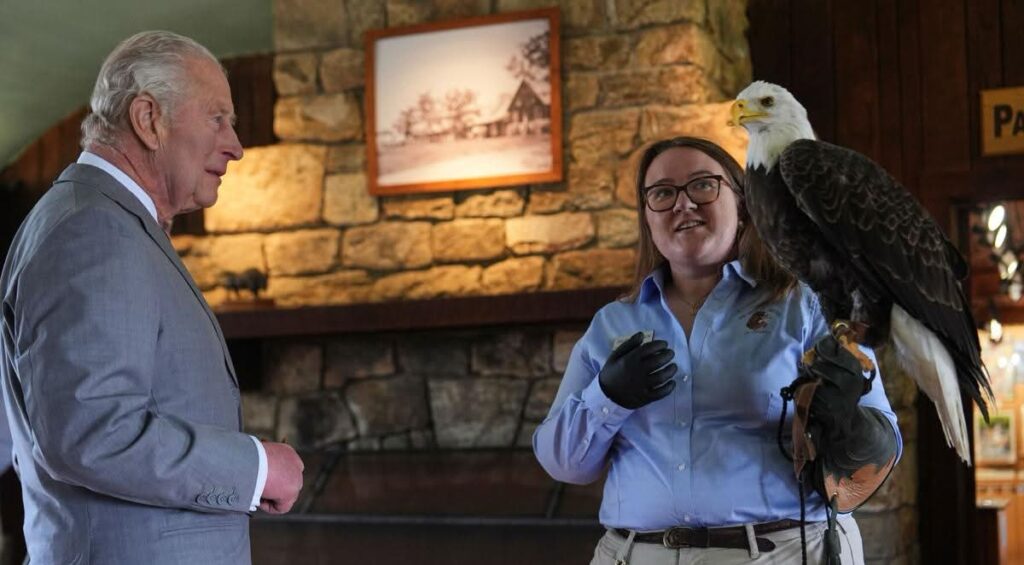
I was so proud of how well Buddy did at the event; he was completely calm amidst all the cameras and security. His Majesty and I discussed the work of the Center, the incredible conservation success of the Bald Eagle, and Buddy’s own unique story. There is nothing I enjoy more than sharing my passion for these amazing birds, and having the chance to do so with one of the most influential people in the world was truly an unforgettable experience.
Why is wildlife education important, and what is one thing you wish more people knew about your field?
One thing I wish people knew about my field is that it is much more than simply teaching the public facts about animals. Wildlife education builds personal connections between individuals and native species, giving them a better understanding of the roles certain animals play in our ecosystem.
In my current position, I see animals come through our wildlife hospital every day with severe injuries suffered in the wild, some of which are caused directly or indirectly by human activity. While our hospital and rehabilitation staff work tirelessly to treat and release these patients, unfortunately some animals do not survive, or their injuries are too severe for them to ever return to the wild.
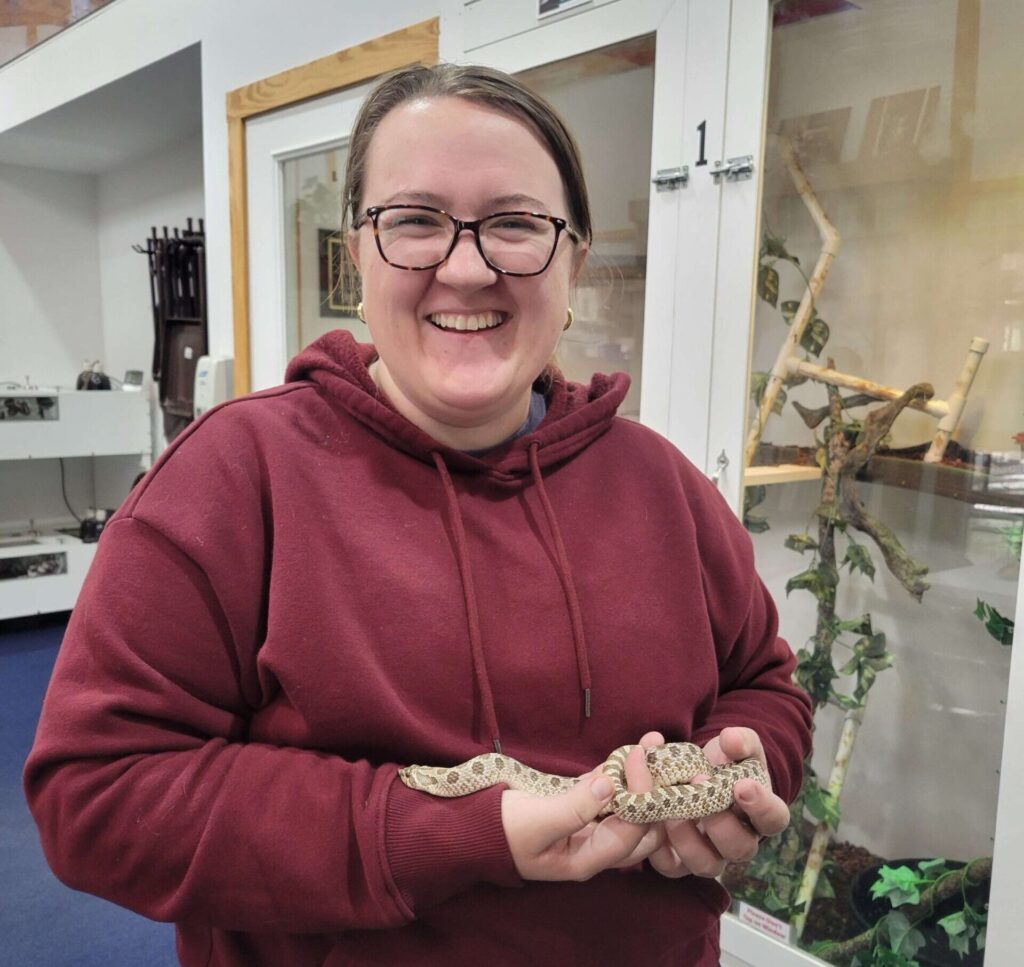
A big part of my role is to help tell the stories of these patients through our animal ambassadors — animals that were once admitted to our hospital themselves and now help educate the public. By introducing people to these animal ambassadors, we can inspire appreciation for wildlife, encourage conservation-minded behaviors, and show how even small actions can make a difference for wildlife.
How did your education at the Herbert College of Agriculture prepare you for the work you do today?
I had the opportunity to explore everything I was interested in while I was at the Herbert College of Agriculture. Whether it was through different classes, internship opportunities, or connections with faculty and advisors, I was able to gain hands-on experience and better understand the career path I wanted to pursue. Those experiences helped prepare me for the work I do today by building both my knowledge and confidence in working with animals, communicating with the public, and growing as a professional.
Were there any faculty, mentors, or experiences during your time at UT that made a lasting impact on your career path?
While I was studying at University of Tennessee, I grew very close to my advisor, Amber Rayborn. She guided me through some of the most challenging situations, helped me build my resume, and has been an incredible source of support throughout my career. There is a lot to be said for taking the time to get to know your advisor and build a strong relationship with them. I never expected that, six years after graduation, I would still be in touch with my advisor, but no matter where I am, I know that if I ever need guidance, she is just an email away.
What advice would you give to students who are interested in careers working with animals or in wildlife-related fields?
Get as much experience as you possibly can! One of the great things about animal and wildlife-related fields is that there are so many different career paths available. Gaining volunteer, internship, or job experience early in your career can help you narrow down your interests, discover what you are truly passionate about, and determine which opportunities are the best fit for you.
Outside of work, how do you like to stay involved in your community or spend your free time?
Whenever I have free time, I prefer to spend it right back in nature. I really enjoy hiking and exploring nature trails in my area, and it is a great way for me to relax and reconnect with the outdoors.